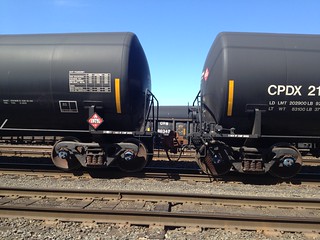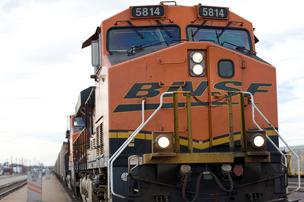
Matthew Staver: A BNSF Railway Company train in La Junta, Colorado, U.S. Photographer: Matthew Staver/Bloomberg
Bakken.com Susan Taylor and Solarina Ho TORONTO (Reuters) Aug 15, 2014
More than eight months after an extreme winter began snarling North
American rail traffic, a Reuters analysis of industry data shows delays
lingering, raising the risk of a second winter of chaos on the rails.
Across the continent’s seven largest operators, trains ran almost 8
percent slower on average and sat idle at key terminals for nearly three
hours longer in the second quarter than a year earlier, data from the
main railroads, known as Class 1, show.
While Canada’s rail operators have nearly recovered, many U.S. operators lag far behind.
The concerns are sharpest in the U.S. Farm Belt, with lawmakers
fearful that the biggest crops on record may be slow to reach markets or
could even rot.
Rail logjams contributed to the economic slowdown early in the year,
rippling across corporate America and affecting everything from car
makers to ethanol producers.....[snip]
ECONOMIC FALLOUT
In the United States, more than 40 percent of goods, valued at more
than $550 billion, are shipped by railroad each year on some 140,000
miles of track. Canada’s 30,100 miles of track carry half of the
country’s export goods.
Frozen transportation links contributed to a nearly 3 percent
contraction in the U.S. economy during the first quarter, the New York
Federal Reserve said last week.....
.....“We’re sounding the alarms right now,” North Dakota Senator Heidi
Heitkamp told Reuters. “We believe the 2014 crop could be taken off the
fields and there won’t be any place to store it, because of the lack of
ability to move product by rail.”
BNSF and Canada’s CP Rail operate the main rail networks in North
Dakota, where farmers vie for space with some 700,000 barrels per day of
crude oil shipped by rail from the state’s Bakken Shale.
“You can’t see these massive increases in crude-by-rail and not
appreciate that they are creating problems for moving agricultural
products,” Heitkamp said.....
read more here