Affiliated with: AFL-CIO
International Association of Fire Fighters Washington State Labor Council | ||
June 8, 2016
The Honorable Jay Inslee Washington State Governor P.O. Box 40002 Olympia, WA 98504 Dear Governor Inslee: Last Friday's oil train derailment and fire in Mosier, Oregon, is a stark reminder that first responders, rail workers, communities, waterways and pristine lands remain in harm's way from Bakken oil train traffic through our state. The account given by firefighters of the Mosier response and by others who have responded to similar incidents across North America make it clear these fires are exceedingly difficult to extinguish, even under unusually ideal circumstances. What happened in Mosier could have just as easily happened in a population center like Spokane or Seattle, resulting in even greater tragedy. You know our position on these matters. In June 2014, delegates at our statewide convention called for an immediate halt to the movement of Bakken crude by rail until there has been a determination that it is safe to transport. Clearly, given the Mosier incident, there has been no such determination. The upcoming summer fire season is shaping up to be another dry and dangerous one. Resources will be stretched thin, and evidence keeps growing that there is no safe way to transport Bakken crude. A derailment and fire in dry wildfire fuels with high winds could easily overwhelm available personnel and equipment in many parts of our state and grow into a conflagration of immense proportions. We urge you to make a request similar to Oregon Governor Brown's by asking the U.S. Department of Transportation to use its authority to prohibit rail transport of Bakken crude through our state until there has been a full investigation into the cause of the Mosier oil train derailment. In addition, please consider the use of your executive authority to reject plans for oil terminals now under review and ask your legal staff to investigate the proclamation of a state of emergency under RCW 43.06.220(l)(i), allowing you to prohibit the continued rail transportation of this dangerous fuel. We appreciate the efforts you have made to date on this subject and stand ready to meet with you, as do other members of our Solidarity Roundtable on Oil, to work toward solutions to this on-going environmental and community crisis. Sincerely, Dennis Lawson, President. Washington State Council of Fire Fighters opeiu8/aflcio/dag | ||
Dennis J. Lawson, President • Greg B. Markley, Secretary-Treasurer
1069 Adams Street Southeast, Olympia, WA 98501 • 1-800-572-5762 • (360) 943-3030 Fax (360) 943-2333 • E-mail: wscff@wscff.org • Website: www.wscff.org | ||
Showing posts with label firefighters. Show all posts
Showing posts with label firefighters. Show all posts
Thursday, June 9, 2016
Fire Fighters send letter to Gov. Inslee
Wednesday, October 14, 2015
Vancouver firefighters oppose oil terminal at port- media links
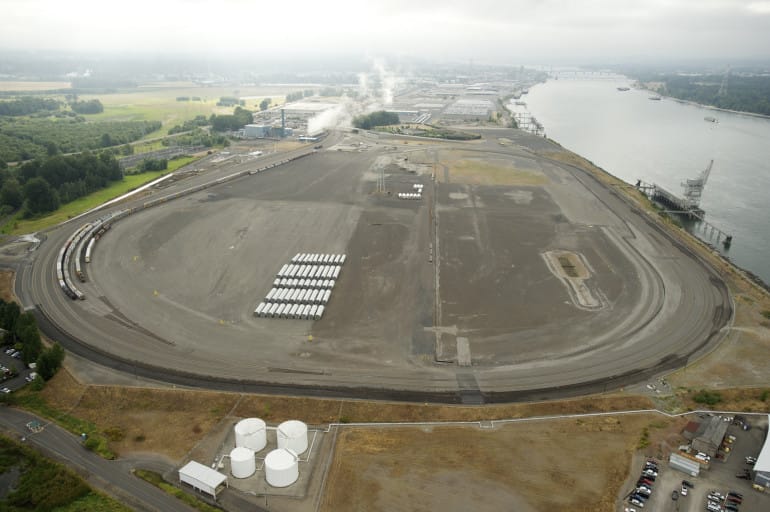
The Port of Vancouver, looking east from Terminal 5
Incredible testimony from the firefighter union at the Port of Vancouver. The ILWU president also
testified against oil in front of a packed house opposed to oil.
Vancouver firefighters oppose oil terminal at port
KOIN- Port of Vancouver terminal would be nation's largest oil-by-rail terminal
Firefighters: Oil train terminal would put too many lives at risk KGW - video
Vancouver firefighters union opposes oil terminal at port
The Columbian- It cites threats to public safety posed by project proposed at Port of Vancouver
Saturday, September 5, 2015
Hazardous materials on trains: little known, safety prep spotty
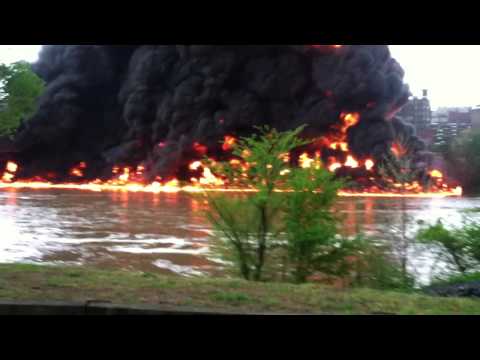
Lynchburg Train Derailment
Large U.S. Cities Prep for Oil Train Disaster
By MICHAEL RUBINKAM and GEOFF MULVIHILL | September 4, 2015 Claims Journal
They rumble past schools, homes and businesses in dozens of cities
around the country – 100-car trains loaded with crude oil from the Upper
Midwest.
While railroads have long carried hazardous materials through congested urban areas, cities are now scrambling to formulate emergency plans and to train firefighters amid the latest safety threat: a fiftyfold increase in crude shipments that critics say has put millions of people living or working near the tracks at heightened risk of derailment, fire and explosion.....
.... The AP surveyed emergency management departments in Chicago; Philadelphia; Seattle; Cleveland; Minneapolis; Milwaukee; Pittsburgh; New Orleans; Sacramento, California; Newark, New Jersey; and Buffalo, New York. The responses show emergency planning remains a work in progress even as crude has become one of the nation’s most common hazardous materials transported by rail. Railroads carried some 500,000 carloads last year, up from 9,500 in 2008.
“There could be a huge loss of life if we have a derailment, spill and fire next to a heavily populated area or event,” said Wayne Senter, executive director of the Washington state association of fire chiefs. “That’s what keeps us up at night.”.... more here
Usually, these materials travel without incident, but when they do not — when an accidental spill occurs — the impact can be deadly, destructive and expensive.
Crude oil trains are derailing and leaking hazardous material in dramatically increasing numbers across the United States, rising from just a single serious incident in 2005 to 47 last year....
..... “It’s actually shocking what comes through the county every day on trains,” said Jeff Galloway, director of the Butler County Emergency Management Agency. “We have every chemical: hydrogen fluoride or chlorine or propane or methane, you name it. In 2012 there were over 23,000 rail cars of hazardous materials and products that flowed through Butler County.”...
... The 5,320 serious hazardous materials incidents since 2005 are a subset of the more than 157,000 hazardous materials incidents reported by carriers to USDOT and analyzed by this newspaper. Serious incidents are defined by the USDOT as hazardous material releases that: cause deaths or major injuries, the evacuation of 25 or more persons, closure of a major roadway, contain certain radioactive materials or severe marine pollutants, alter aircraft operations or contain more than 119 gallons or 882 pounds of a hazardous material....
.... U.S. Senators Sherrod Brown, D-Ohio, and Rob Portman, R-Ohio, and a spokeswoman for U.S. House Speaker John Boehner, R-West Chester Twp., all said more must be done at the federal level to improve the safety in the transport of hazardous materials..... more here
While railroads have long carried hazardous materials through congested urban areas, cities are now scrambling to formulate emergency plans and to train firefighters amid the latest safety threat: a fiftyfold increase in crude shipments that critics say has put millions of people living or working near the tracks at heightened risk of derailment, fire and explosion.....
.... The AP surveyed emergency management departments in Chicago; Philadelphia; Seattle; Cleveland; Minneapolis; Milwaukee; Pittsburgh; New Orleans; Sacramento, California; Newark, New Jersey; and Buffalo, New York. The responses show emergency planning remains a work in progress even as crude has become one of the nation’s most common hazardous materials transported by rail. Railroads carried some 500,000 carloads last year, up from 9,500 in 2008.
“There could be a huge loss of life if we have a derailment, spill and fire next to a heavily populated area or event,” said Wayne Senter, executive director of the Washington state association of fire chiefs. “That’s what keeps us up at night.”.... more here
Bill aims to upgrade safety for materials sent by rail
Nick Blizzard | The Dayton Daily News Sept 4, 2015
MIAMISBURG — Chemical toxins such as chlorine gas, radioactive material or explosive crude oil hauled in puncture-prone train cars pass through the region virtually every day, yet authorities — including first-responders — are given little information about what deadly loads are in their midst.Usually, these materials travel without incident, but when they do not — when an accidental spill occurs — the impact can be deadly, destructive and expensive.
Crude oil trains are derailing and leaking hazardous material in dramatically increasing numbers across the United States, rising from just a single serious incident in 2005 to 47 last year....
..... “It’s actually shocking what comes through the county every day on trains,” said Jeff Galloway, director of the Butler County Emergency Management Agency. “We have every chemical: hydrogen fluoride or chlorine or propane or methane, you name it. In 2012 there were over 23,000 rail cars of hazardous materials and products that flowed through Butler County.”...
... The 5,320 serious hazardous materials incidents since 2005 are a subset of the more than 157,000 hazardous materials incidents reported by carriers to USDOT and analyzed by this newspaper. Serious incidents are defined by the USDOT as hazardous material releases that: cause deaths or major injuries, the evacuation of 25 or more persons, closure of a major roadway, contain certain radioactive materials or severe marine pollutants, alter aircraft operations or contain more than 119 gallons or 882 pounds of a hazardous material....
.... U.S. Senators Sherrod Brown, D-Ohio, and Rob Portman, R-Ohio, and a spokeswoman for U.S. House Speaker John Boehner, R-West Chester Twp., all said more must be done at the federal level to improve the safety in the transport of hazardous materials..... more here
16-car train derails on CSX rail line in eastern Indiana
September 3, 2015 SF Gate
PARKER CITY, Ind. (AP) — Eastern Indiana officials say a 16-car train that derailed near a high school closed a county road for several hours......... Hendrickson says the derailed cars were empty coal cars..... more here
Thursday, June 11, 2015
Rail 'safety' planning: common good, common sense in short supply

Train derailment sends crude oil cars into Kanawha River; explosions erupt, Feb 2015.
Mock derailment tests emergency response
LaCrosseTribune.com By Chris
Hubbuch June 10, 2015
[Scenario:] .... a freight
train hauling 2.7 million gallons of crude oil derails as it crosses Pammel
Creek on the South Side of La Crosse, spilling about 100,000 gallons of the
volatile cargo.
Traffic comes to a halt as
motorists stop to gawk at the overturned tankers beneath the overpass.
Firefighters struggle to get through the bottleneck.
Within minutes, the pool of oil ignites, searing the skin of everyone within 50 yards and sending a plume of toxic smoke into the air. Shortly after firefighters arrive, a tank car explodes in a fireball that can be seen for miles, killing a dozen people — including five firefighters — and injuring another 60.
That was the fictitious scenario posed to dozens of emergency responders Wednesday at an Onalaska conference center....
....The scenario outlined damages far beyond the loss of life:
- 86 nearby homes are damaged; 22 are uninhabitable, displacing 39 residents.
- The Mormon Coulee overpass is destroyed, hindering access for first responders and snarling traffic for months.
- Some 75,000 gallons of oil spills into the Mississippi River, spreading over 64 miles to Guttenberg, Iowa.
Participants on Wednesday discussed emergency response; today they will meet to look at recovery.
“That’s where the long tail is,” Satula said. “Recovery takes a long time.”..... “no kind of training is really going to prepare a fire department … for the kind of catastrophic event we’re going through today.”.........more here
[Ed note: no one discussed liability. ]
House Republicans' Safety Plan for Amtrak: Videotape the Next Derailment Rather Than Prevent It
By Tim Starks The New Republic
.....Tuesday, the GOP-controlled House passed a transportation spending bill that provides $9 million for inward-facing cameras in all cabs to record engineers on the job. The funding was added without objection from anyone in either party.
The cameras might have bipartisan support, but what they won’t do is prevent the next train accident. They are only useful when a crash has already happened. “Inward-facing cameras are very important for determining the reason for a crash afterwards,” Tho “Bella” Dinh-Zarr, the vice chairwoman of the National Transportation Safety Board, told a Senate committee
Wednesday. And in the meantime, for all the Republican protests that
money for rail safety wasn’t an issue in the May derailment, the House’s
spending bill denies funding that very well could avert the next
disaster..... more here
Subscribe to:
Posts (Atom)